
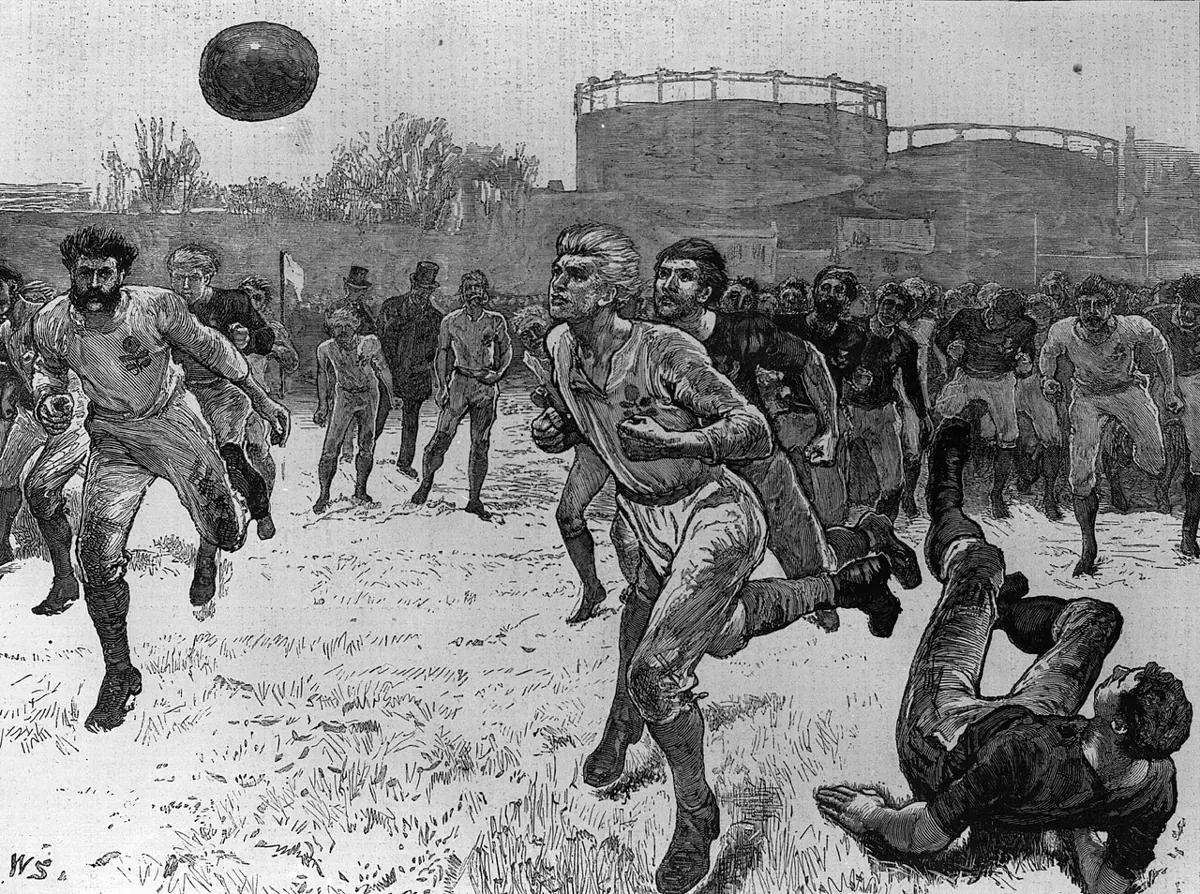
Football as we know it today has a specific, well-documented origin, even though games involving kicking a ball existed in many cultures long before the modern sport took shape.
Before the modern rules
Ball games that involved kicking existed in various forms across many cultures for centuries before football was formally codified. In England specifically, informal, often chaotic forms of football were played in towns and schools, frequently with few shared rules between different groups, which made matches between schools or towns difficult to organise since everyone played by slightly different local customs.
The Cambridge Rules and the split from rugby
A key early step toward a shared rulebook was the Cambridge Rules of 1848, an attempt by students to agree on a common set of rules that different schools could play by. The bigger turning point came in 1863, when representatives of several London clubs and schools met and founded The Football Association in England — the first governing body of its kind. Crucially, this is also when the rules split cleanly from what became rugby football: The Football Association settled on rules that prohibited carrying the ball with the hands and hacking an opponents shins, practices that the clubs who preferred the rugby-style game were not willing to give up, leading the two codes to formally separate.
From England to the world
Once a shared, written rulebook existed, the game spread rapidly — through schools, through the British Empires trading and colonial networks, and through sailors and workers who brought the game with them to ports and cities abroad. National football associations began forming in other countries in the following decades, which eventually created the need for an international governing body to organise matches and agree rules between different national associations.
FIFA and the World Cup
FIFA, football’s international governing body, was founded in 1904 by a handful of European national associations to oversee international competition. It took over two decades more before the idea of a global tournament for national teams became reality: the first FIFA World Cup was held in 1930, hosted and won by Uruguay, with a relatively small number of invited teams compared to the tournament’s scale today. From that starting point, the World Cup grew into the global event it is now, and football spread to become the most widely played and watched sport on the planet.
Why this history still matters
Many of the ideas that shaped football early on — a shared rulebook agreed between different groups, a governing body to enforce it, and competitions open to anyone who could organise a team — are still the basic structure the sport runs on today, right down to the grassroots level where a young player’s first matches are organised under rules that trace back to those original 19th-century agreements.